

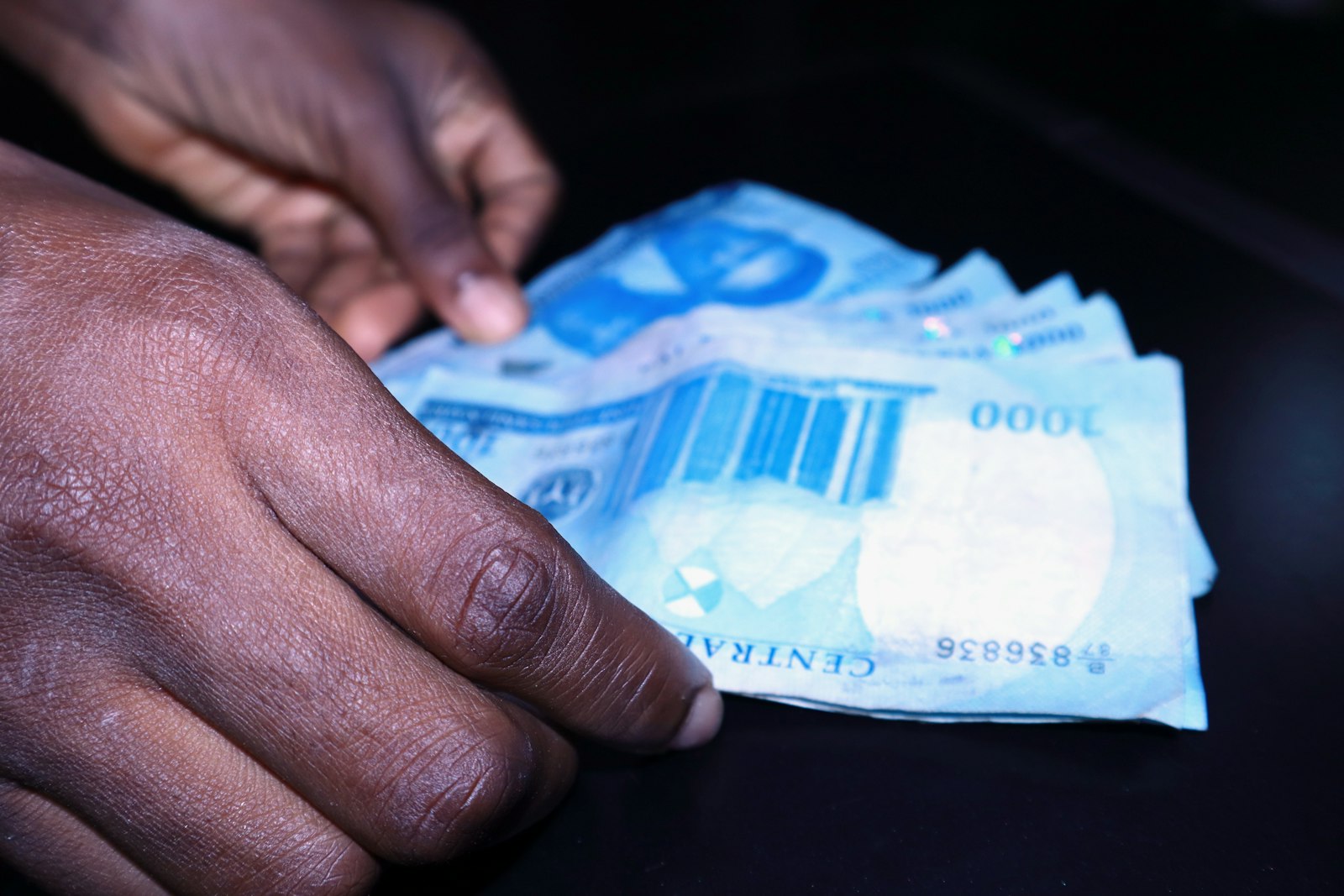
Three banks, one new rulebook, and the envelope your aunty still swears by.
If you just want the comparison, here it is. A foreign currency account in Nigeria is a domiciliary account: a Dollar, Pound or Euro account at a Nigerian bank, opened beside your Naira account. Going by the most recent published reports, GTBank and UBA will open one with no opening deposit, Access asks for $100 (or £100, or €100), and all three want your BVN, a valid ID and proof of address, with GTBank and Access also asking for two references.
The bigger news is the rulebook. Since Jun 2026, ordinary dom account holders can use their own balances without anyone's approval and send up to $10,000 a day abroad. Below: each bank in detail, what sending money out costs, and the question that tells you whether you need a bank for this at all.
What a Foreign Currency Account in Nigeria Actually Is
Every Nigerian family has a version of the envelope. In plenty of homes it lives inside a hardback Bible on top of the wardrobe: a few hundred Dollars in crisp twenties, plus one tired fifty that no bureau in Lagos will accept because of a small tear in the corner. It is a foreign currency account in every sense except the bank: Dollars in, Dollars kept, Dollars out when somebody needed school fees.
A domiciliary account is that envelope with a vault, a statement and a SWIFT code. You receive foreign currency into it, hold it, wire it out, and at some banks spend it on a card. Each currency is its own account with its own number, which is why "multi-currency" means something smaller here than it does abroad (we went through that properly in what a multi-currency account means in Nigeria).
GTBank vs Access vs UBA: Foreign Currency Accounts Compared
These are the three big banks with recent, published figures we could check. All of it comes from Legit.ng's bank guides (Jun 2025) and Pulse's round-up of dollar accounts (Apr 2025), so treat it as the last public word, not a promise, and confirm at the branch.
| GTBank | Access Bank | UBA | |
|---|---|---|---|
| Opening deposit | None required | $100, £100 or €100 | None (zero-balance) |
| Minimum balance after | None | None | None |
| Monthly maintenance fee | Sources disagree | None | None |
| References | Two forms from current account holders | Two, ideally Access customers | Not listed |
| Card | Prepaid debit card for ATM and POS abroad | Debit card, $10 | Not listed |
| Sending money abroad | Transfer fees vary by transaction | $25 SWIFT fee plus 0.75% of the amount | Not listed |
GTBank is the cheapest door in, but those two reference forms are what turn a Tuesday errand into a three-week project. Access charges $100 to start and is the only one here that spells out what an outbound transfer costs. UBA is the lightest on paper (BVN, ID and biometrics, per Pulse) and publishes the least about what happens after.
Zenith and First Bank are missing on purpose: we could not find current figures for either that we would stand behind, and guessed numbers are worse than a shorter table.
How to Open a Foreign Currency Account
The list barely changes from bank to bank: the account opening form, a valid ID (international passport, NIN slip or driver's licence), passport photographs, a utility bill from the last three months, your BVN, and in most cases an existing Naira account at the same bank. Add the two references where the bank asks for them. We walked through the branch visit step by step in how to open a dollar account in Nigeria, so I will spare you the queue description twice in one month.
If you already bank with one of these three, start there, since your BVN, address and Naira account are on file. The USSD codes for GTBank, Access and UBA are on our bank-codes pages if you want to check a balance without the app.
What Sending Money Out of One Actually Costs
The line people skip and then meet on their statement. On Access's published charges, a $1,000 wire to a school abroad costs the $25 SWIFT fee plus 0.75% of the amount, so $32.50 before the money has left Lagos. Not a scandal (wires cost money everywhere), just the number to compare against whatever you were going to do instead.
What the 2026 Rules Changed
Quite a lot, and in your favour. Under the CBN's Foreign Exchange Manual 2026, ordinary domiciliary holders got "unfettered and unrestricted access" to their own funds, with no prior approval, telegraphic transfers of up to $10,000 a day, and no Form A where the transfer is funded from your own personal account.* If you still carry the 2020 fear, money goes in and somebody else decides when it comes out, the rulebook now reads very differently.
One more rule worth knowing if family abroad send you money through a remittance service: Legit.ng's Jun 2026 summary of the manual says cash collected over the counter is capped at $200, and anything bigger has to be paid into a bank account. That alone is a decent reason for a lot of people to have somewhere for the money to land.
So Do You Need a Bank for This?
Back to the Bible on the wardrobe. The envelope was never the point; the point was keeping money in a currency that held its value until it was needed. Ask what yours is for. If Dollars have to leave Nigeria in your own name (fees in Leeds, a supplier in Guangzhou, a hospital bill in Accra), open the account, because nothing does that more cleanly than a bank wire with a branch behind it.
If your Dollars arrive from clients abroad and leave as Naira (rent, light, the carpenter, your mum's transfer), the dom account quietly becomes a waiting room. The money lands, sits, and has to be moved before it buys anything here.
Where Mular Fits
On Mular your Dollars can sit as USDT or USDC, or in your USD balance, next to your Naira and whatever BTC, SOL or other coins you keep there, and funding a USDT or USDC wallet costs nothing.**
When the bill lands, pay it straight from that balance on Mular: Naira reaches any Nigerian bank account in about ten seconds, for a ₦50 withdrawal fee.** And the chore every Dollar earner knows, checking what a Dollar is worth today before you agree a price, is one page: the USD to Naira and GBP to Naira pages carry the live rate. Although, almost forgot, Mular shows you the exact Naira figure before you confirm anything, so you never do the sum at the counter.
Keep the Bank for Wires, Use the App for Life
I am not telling you to skip the bank; the 2026 rules made the dom account better than it has been in years. Just be honest about the job you are hiring it for. Most people searching this are not wiring tuition. They are paid in one currency, live in another, and want the envelope without the wardrobe.
Hold Dollars, Pay in Naira, No Branch Visit
Mular keeps your Dollars as USDT or USDC for as long as you want, then pays any Nigerian bank account in Naira in about ten seconds when you need it to. No opening deposit, no reference forms, and the rate is on your screen before you tap confirm.
Download Mular and retire the envelope.
As always, stay Jiggy.
Love, Mr Mular.
* The Foreign Exchange Manual 2026 details (unrestricted access, the $10,000 daily telegraphic transfer limit and the Form A change) are from BusinessDay, read 22 Oct 2026: https://businessday.ng/news/article/cbn-frees-personal-dollar-accounts-tightens-oversight-of-export-proceeds-in-new-fx-rules/
** Mular details as at 22 Oct 2026: funding a USDT or USDC wallet costs nothing, and paying a Nigerian bank account from that balance carries a ₦50 withdrawal fee. Fees change, so read the screen before you confirm.
Written for everyone whose first foreign currency account was a hardback Bible, and who still has the torn fifty to prove it 😭
Related reading: whether to keep your earnings in Dollars at all, and why PayPal still does not work here if that is how your clients wanted to pay you.