

A star, three digits and a hash. No data, no app, no smartphone, and somehow it still works when everything else is buffering.
USSD banking is banking by dialling a short code on your phone, like *737# for GTBank or *894# for First Bank. You dial, a menu pops up, you pick a number, and you can send money, check your balance or buy airtime without data or an app. It works on any phone with a SIM, and since June 2025 each session costs ₦6.98 for every 120 seconds, taken from your airtime after you agree to it on screen. That is the short answer.
The longer answer covers how to set it up, the code for your bank, what it really costs, whether it is safe, and why millions of Nigerians still reach for it in 2026 when everyone and their landlord has a banking app.
What Is USSD Banking?
USSD stands for Unstructured Supplementary Service Data, which is a long name for a very old trick. It is the same channel your network uses when you dial a code to check your airtime balance: a live, text-only session between your phone and your network, open for as long as the menu is on screen. Banks rent that channel from the telcos and hang a menu on the end of it, so the "app" lives on the network rather than on your phone.
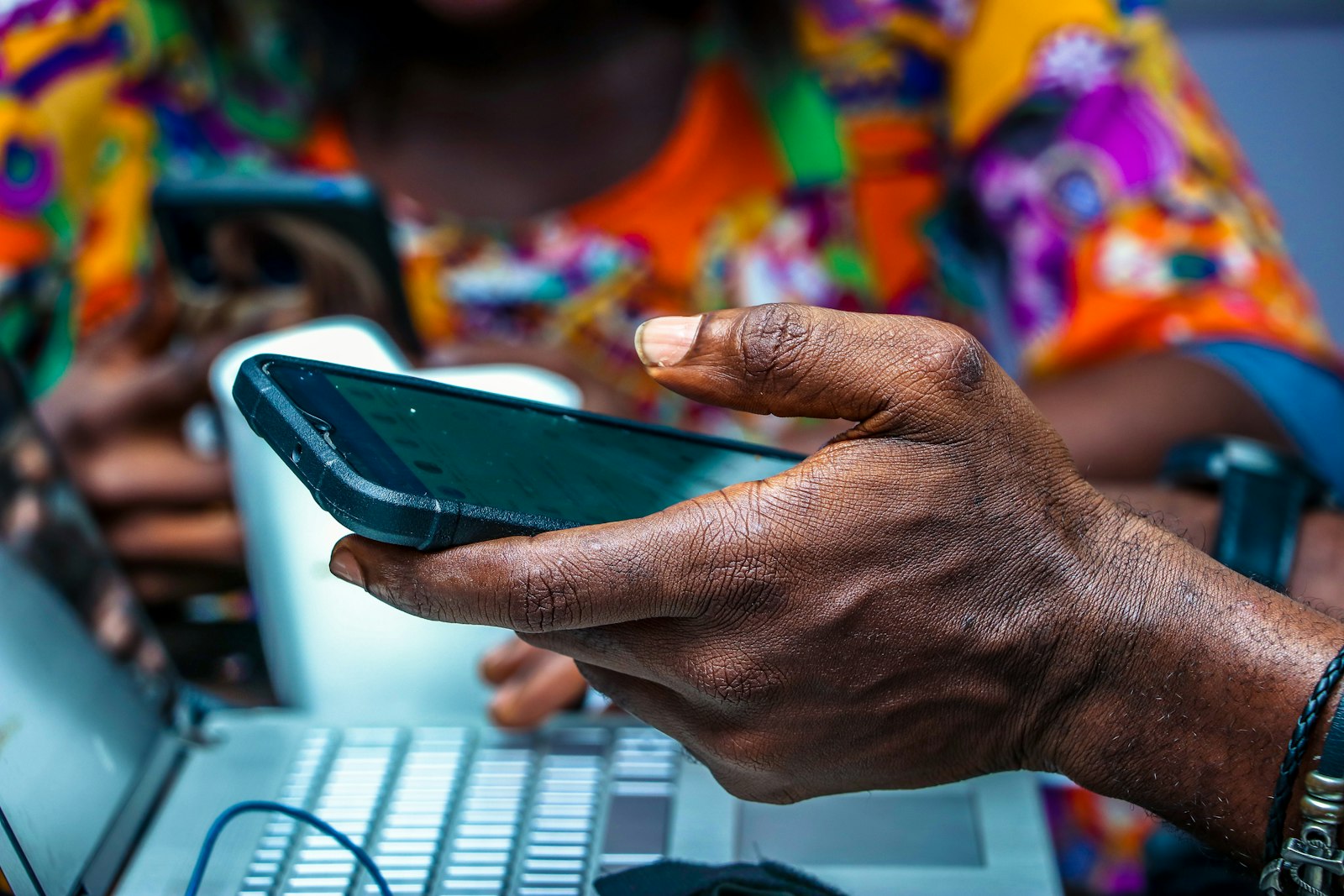
That is why it works on the torchlight phone. You know the one: the small Nokia with the built-in torch that your aunty has owned since 2011, which has survived two floods, one generator explosion and a fall into a pot of egusi, and which still holds charge for four days. That phone cannot open a single app, and it can send ₦20,000 to a supplier in Kano in under a minute. Your smartphone, meanwhile, is on 3% and asking for an update.
How to Use USSD Banking, Step by Step
Setting it up takes about two minutes, and you only do it once per bank.
- Dial your bank's code (see the list below) from the phone number registered to your bank account. A different SIM will not work, which is the whole point.
- Follow the registration menu. Most banks ask you to confirm part of your account number or card number, then create a four-digit PIN.
- To send money, dial the code again, choose Transfer, enter the amount, the account number and the bank, then confirm with your PIN.
- Wait for the confirmation message, and for the SMS alert from your bank.
The steps differ slightly from bank to bank, and some banks let you skip the menu by typing the amount and account number straight into one long code. If a menu asks for your BVN and you have forgotten it (no judgement), here is every way to check your BVN, USSD included.
USSD Codes for Every Major Nigerian Bank
Here are the ones people ask about most: GTBank *737#, Access Bank *901#, First Bank *894#, UBA *919#, Zenith Bank *966#, Fidelity Bank *770#, Sterling Bank *822# and Polaris Bank *833#. Fintechs have their own too, OPay on *955# and PalmPay on *652# among them.
For everything else, we keep a full page per bank with its transfer, balance, airtime and account-blocking codes: Access Bank, Ecobank, FCMB, Fidelity Bank, First Bank, GTBank, Keystone Bank, OPay, PalmPay, Polaris Bank, Providus Bank, Stanbic IBTC, Sterling Bank, UBA, Union Bank, Wema Bank and Zenith Bank. Or start from the bank codes index and find yours.
How Much Does USSD Banking Cost in 2026?
Since 18 Jun 2025, ₦6.98 for every 120 seconds a session stays open, deducted from your airtime rather than your bank account.** Before the charge applies, a prompt asks you to opt in, and only successful sessions are billed. The change came out of years of wahala between banks and telcos over who owed whom for USSD (a debt reported at ₦250 billion), which ended with the cost moving to the person actually dialling.
So a quick transfer costs ₦6.98 of airtime, and a session where you stop to look for your glasses costs double. Your bank's own transfer charge, if it has one, is separate. And a line with ₦0 credit is now a line that cannot do USSD banking, which nobody in 2015 would have believed.
Why Millions of Nigerians Still Dial a Code
Because it works when nothing else does. In the first half of 2024 alone, Nigerians made 252 million USSD transactions worth ₦2.19 trillion, per the CBN's electronic payment statistics.* For a channel people keep calling old, it is doing a lot of quiet heavy lifting.
The reasons are the ones you would guess if you have ever stood in a Lagos market with one bar of signal. No data bundle to run out of, no app to update, no login screen that forgets you. It works on the cheapest phone sold in the country, in places where 4G is more of a rumour. For a trader at Balogun or anyone whose smartphone just got stolen in traffic, the star and the hash are the bank.
Is USSD Banking Safe?
Safe enough, if you treat the PIN like your ATM PIN, because that is what it is. Never tell anyone your USSD PIN, and never dial a code somebody sends you "to confirm a payment". A real transfer never needs you to dial anything, and that message is a scam however official it sounds.
The bigger risk is the SIM itself. Your USSD banking is tied to your phone number, so if your phone is stolen or your line suddenly goes dead without explanation, call your bank and block the account straight away. Many banks also have a code that freezes your account instantly from any phone, and it is on each bank's page linked above. Write yours down somewhere that is not the phone.
What USSD Banking Cannot Do
I am not saying USSD is perfect. Sessions time out if you dawdle, the menus are basic, and banks set USSD transfer limits lower than their apps, depending on your account tier. It also only speaks Naira. If you are a freelancer paid in USDT, or holding Dollars, the star and the hash cannot see that money at all.
That is the gap we built for. On Mular you pay any Nigerian bank account straight from your USDT, USDC or other crypto balance, and the Naira lands in their account in about ten seconds, with a ₦50 withdrawal fee as at 29 Oct 2026. Check what your balance is worth first on the USDT to Naira page. And yes, the app needs data, so for the days it runs out we would honestly rather you knew your bank's code too. We cover the other half of that problem in paying airtime and data with crypto.
The Reframe
USSD is not old technology that refuses to die. It is the floor: the version of banking that still works with no data, no app and a phone that has been in a pot of soup. Apps get the attention, but the floor catches you on the day the network, the battery and your patience all go at once.
So learn your bank's code before you need it. Then go back to your aunty's torchlight phone and apologise for laughing at it.
One App for the Money Your Code Cannot See
Your USSD code handles the Naira in your bank. Mular handles what it cannot see: get paid in USDT or USDC, hold Dollars, and pay any bank account in Nigeria straight from that balance in about ten seconds, no P2P stranger involved.
Download Mular and keep the code for the days you are out of data.
As always, stay Jiggy.
Love, Mr Mular.
* USSD volume and value for January to June 2024, from the Central Bank of Nigeria's electronic payment statistics as reported by Legit.ng, 13 Dec 2024: https://www.legit.ng/business-economy/money/1630430-despite-n200bn-debt-mtn-airtel-telcos-banks-ussd-transactions-hit-n2trn
** The ₦6.98 per 120 seconds airtime charge, the opt-in prompt and the 18 Jun 2025 start date and the ₦250 billion debt behind it, as announced by the Association of Licensed Telecom Operators of Nigeria and reported by Nairametrics, 18 Jun 2025: https://nairametrics.com/2025/06/18/telecom-operators-to-begin-direct-airtime-charges-for-ussd-services-from-june-18
Written by someone who has dialled *737# from a borrowed phone at least once, and who would like that phone's owner to know the ₦6.98 is coming.
Related reading: if the menu asked for a BVN you cannot remember, here is how to check your BVN. And if you are deciding whether you even need a Dollar account in a Naira world, read multi-currency accounts in Nigeria.